When Airtime Became Money: The Accidental Currency Revolution in Africa
In the early 2000s, something remarkable happened across parts of Africa.
Mobile phone airtime minutes — the prepaid credits people used to make calls and send texts — quietly transformed into a form of currency.
No central bank announced it.
No legislature approved it.
No white paper proposed it.
It simply emerged.
And in doing so, it revealed something profound about how money actually works.
The Conditions That Made It Possible
Across countries like Kenya, Nigeria, and South Africa, the situation was similar:
Mobile phone ownership was rising rapidly
Bank access was limited
Many people worked in informal economies
Sending money across distance was slow or expensive
At the same time, telecom companies sold prepaid airtime vouchers that could be:
Bought with cash
Transferred via SMS
Divided into small amounts
Used anywhere within the network
Airtime credits became easy to send, easy to value, and widely trusted.
That’s when people began using them for more than phone calls.
Kenya: The Birthplace of Mobile Money
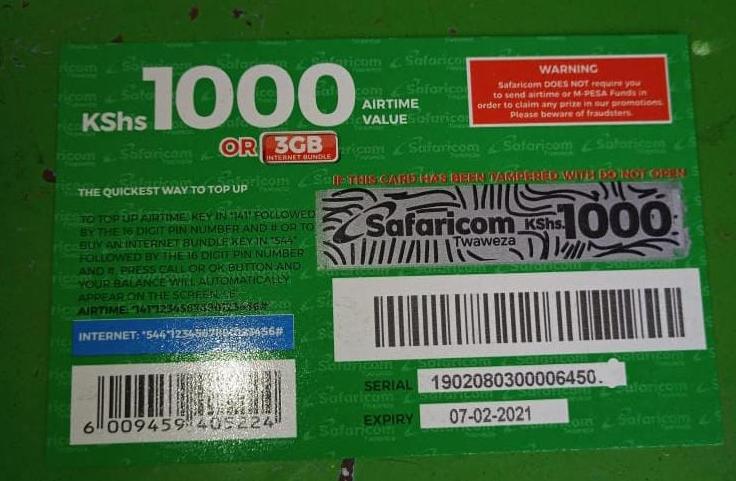
Before Safaricom launched M-Pesa in 2007, Kenyans were already doing something ingenious.
They would:
Buy prepaid airtime
Transfer airtime credit to another person via SMS
The recipient would either use it or sell it to a broker for cash
It wasn’t officially designed as money — but it functioned like money.
This informal behavior directly inspired the creation of M-Pesa, which formalized the idea of sending value over mobile networks.
South Africa & Nigeria: Parallel Micro-Economies
In South Africa, airtime transfers became common in townships. People paid for small goods, services, or debts by transferring mobile credit.
In Nigeria, prepaid recharge codes were frequently traded and resold. Airtime acted as a liquid, divisible store of value — particularly for small transactions.
In many communities, airtime became:
A remittance tool
A wage substitute
A debt-settlement mechanism
A micro-transaction system
All without being officially declared a currency.
Why Airtime Worked as Money
Money is not defined by paper or metal. It’s defined by function.
Airtime met the key criteria:
Transferable – Could be sent instantly by SMS
Divisible – Small amounts could be transferred
Recognized – Everyone knew what airtime was worth
Trusted – Backed by major telecom companies
Scarce – Required real-world payment to acquire
In essence, airtime became a digital bearer asset within telecom networks.
People didn’t need permission to treat it as money.
They simply started doing it.
From Informal Currency to Formal Mobile Money
By 2007, systems like M-Pesa formalized what communities were already doing informally. Mobile money accounts replaced airtime as a medium of exchange.
The innovation wasn’t created from scratch.
It was an institutional response to grassroots monetary behavior.
Today, mobile money systems across Africa move billions of dollars annually — but the seed was planted when people repurposed airtime into currency.
What This Teaches Us About Money
The airtime phenomenon demonstrates a powerful principle:
Money is not declared. It is adopted.
When a tool meets the functional needs of exchange — people will use it as money, even if it wasn’t designed for that purpose.
This has implications far beyond Africa:
Digital currencies
Bitcoin and Lightning
Stablecoins
Decentralized marketplaces
Tokenized ecosystems
Whenever you combine:
A trusted network
Transferability
Scarcity
Divisibility
Widespread acceptance
You create the conditions for currency — whether governments approve it or not.
The Quiet Monetary Revolution
There were no headlines announcing that airtime had become money.
No ceremonies marking its adoption.
Just millions of small decisions by ordinary people solving practical problems.
And in doing so, they demonstrated one of the most important truths in economics:
Markets evolve faster than institutions.
Sometimes, money doesn’t start in a mint.
It starts in a text message.
Comments
Post a Comment